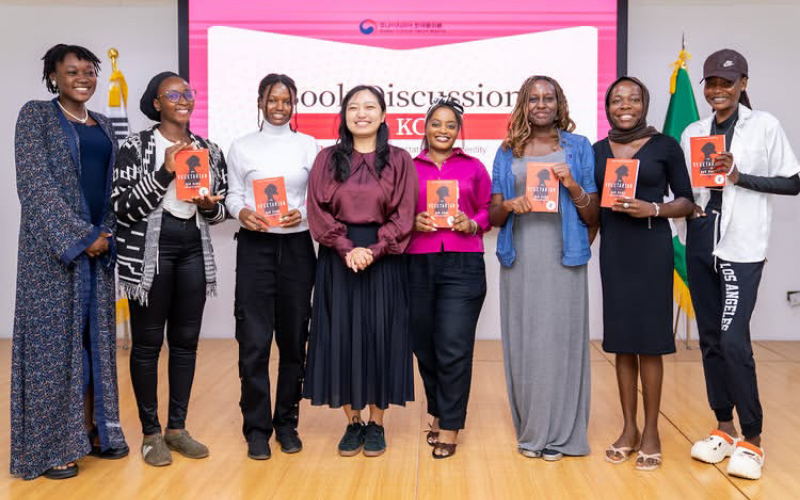
Korean Cultural Centre Nigeria, on the 30th of June 2026, launched the first edition of the Book Discussion with KCCN, which featured Han Kang’s book titled The Vegetarian. The event was held at KCCN in Abuja and had about 20 people in attendance. The book discussion with the KCC Nigeria event started at 2.00 pm West African time. The discussion was moderated by Hilda Alagada, and there were two panellists, namely Rhoda Nuhu, who is a publishing professional in Nigeria and Lee Yunjin, the Cultural Event Manager of KCCN. The event was coordinated by Habiba Sharon Yakubu. At the event, Han Kang’s novel was explored from Korean and Nigerian perspectives, which created a balanced and engaging discussion. To get an insight into the event, interviews were done via email, WhatsApp, and LinkedIn from 12th July to 15th July 2025, with Igwe Ene Evelyn and Hilda Alagada. This event showed that literature can be a lens through which Korean culture can be understood. Several themes were discussed, such as womanhood, identity, societal expectations, and personal autonomy. There was also an interactive Q&A session and the opportunity to win a copy of the featured book.
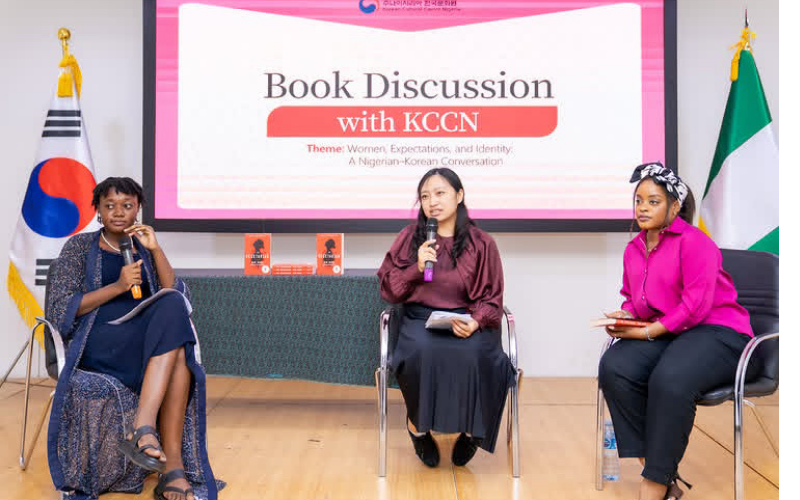
Han Kang is the Winner of the 2024 Nobel Prize in Literature and an author of several fascinating books, such as Human Acts, The white books, vegetarian. Hilda Alagada stated that Han Kang is known for exploring the complexities of identity, memory, trauma, and the quiet ways people resist the expectations placed upon them. The Vegetarian follows Yeong-hye, whose decision to stop eating meat gradually unravels the lives of those around her. Hilda also mentioned that the session explored women’s identity through both Korean and Nigerian perspectives.
One of the participants, Igwe Ene Evelyn, talked about how the discussion provided valuable context for the novel, which helped to understand the social and cultural influences behind the story. It also introduced Han Kang’s writing style, which uses symbolism and emotion to address complex issues while inviting readers to think deeply rather than offering simple answers.
Also, the event showed how a single novel can be interpreted in different ways depending on a reader’s cultural background and personal experiences. Ene also learned the importance of asking questions, listening to different viewpoints, and engaging in thoughtful discussions about literature.
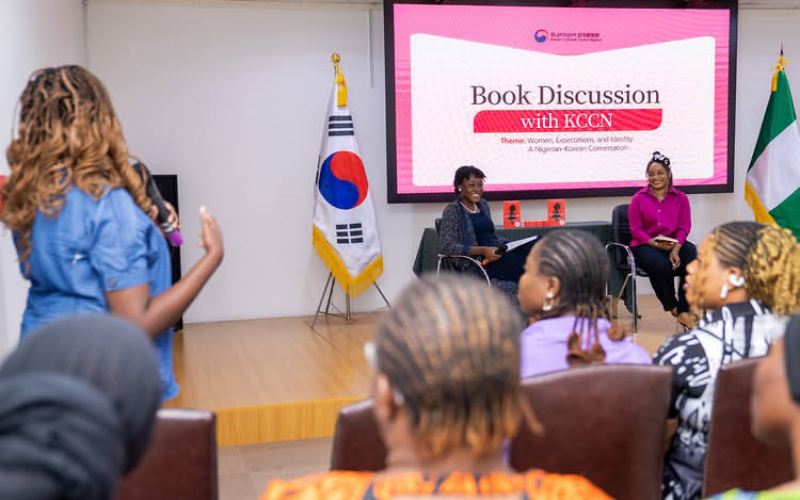
One of the attendees shared that the event was special because it brought people together through literature while encouraging cultural exchange. It also created a welcoming space where readers can share ideas, learn from experts, and discover new perspectives. The interactive Q&A session and the opportunity to win a copy of the featured book made the experience even more memorable.
Recently, in Nigeria, there has been a wide acceptance of Korean literature and books in the book-reading community and even beyond. This event was a step in the right direction to sharing the knowledge and love for Korean literature and books.
Article first written as a koreanet honorarybreporter.